I received an advanced review copy of this book for free from the publisher via NetGalley. This did not affect my opinion of the book in any way.
Publisher: Virago
Published: February 2026
Pages: 464
Add to Goodreads | Add to The StoryGraph
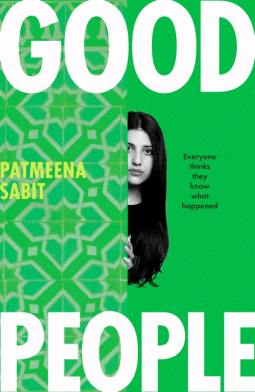
Synopsis
Zorah Sharaf could do no wrong.
Zorah Sharaf brought shame upon her family.
What’s the truth? Depends on who you ask.
The Sharaf family is the picture of success. Successful, rich, happy. They came to this country as refugees with nothing more than the clothes on their backs. And now, after years of hard work, they live in the most exclusive neighborhood, their growing family attending the most prestigious schools. Zorah, the eldest daughter, is the apple of her father’s eye.
When an unthinkable tragedy strikes, everyone is left reeling and the family is thrust into the court of public opinion. There is talk that behind closed doors the Sharafs’ happy household was anything but. Did the Sharaf family achieve the American dream? Or was the image of the model immigrant family just a façade?
Like a literary game of ping-pong, Good People compels the reader to reconsider what might have happened even on the previous page. Told through a kaleidoscope of perspectives, it is a riveting, provocative, and haunting story of family—sisters, brothers, mothers, fathers, and the communities that claim us as family in difficult times.
My Thoughts…
What a ride this book was! Good People is a fantastic debut, one of those books I’ll keep thinking about for a while yet and that kinda makes me wish I had a bookclub to discuss it with.
The Sharaf family escaped war in Afghanistan to find refuge in the US. After years of sacrifices getting by on charitable donations in a cramped one-bedroom flat, Rahmat finally finds success with his latest business venture and quickly becomes the symbol of the American dream. Nothing is off limits anymore: a mansion in an exclusive neighbourhood, the most prestigious schools for his children, luxury cars and designer clothes… anything his family desires he can now provide for them. Especially for Zorah, the daughter who holds a special place in his heart.
Except money and fortune can only go so far when tragedy strikes. And when that happens, amidst the unthinkable pain of the family, it seems as though everyone has an opinion on what was really going on behind closed doors.
I loved the fact that the author chose an unconventional writing style to tell this story. The book is set up as a series of extracts from interviews, slowly unveiling the story. Family friends, former neighbours, teachers, and even cashiers at local stores, all have something to say about the Sharafs and the events that unfolded. I’m purposely keeping this vague to avoid spoilers, as figuring out what had happened in the first place was one of the things I enjoyed about this book and I don’t want to spoil this for anyone. I actually think this is a great book to approach blindly and allow yourself to be transported by the narrative flow. If you do want to have as little information as possible prior to reading, be careful if you’re checking this book out online as I saw that one of the editions mentions what the tragic event is more explicitly in the blurb (on Goodreads, too).
Back to the style, the short interview snippets work wonderfully to draw the reader in, making us feel almost as if we were the ones carrying out the investigation. Interviewees vary widely and each brings their own perspective on the family and the events they either witnessed directly or heard about through the rumour mill. And so, they end up painting extremely different pictures of the family: are the Sharafs a tight-knit family with doting parents and dutiful children, or was their house secretly a reign of terror where unreasonable rules were strictly enforced?
By the end of the book, we’re left with more questions than answers, and certainly extremely unsettled by the proximity to any other “news story” we may come across in the newspaper. How many times do we form opinions or judgments on people we barely know – if at all – based only on snippets of information or a very superficial knowledge? How often are we quick to judge in the court of public opinion or in that of social media, without having the full picture? And how do our stereotypes feed into that judgment, leaving us unable to evaluate cultural differences fairly?
It is unsettling to realise how easily we can be manipulated into thinking one thing, only for that view to be challenged in the next chapter by a new insight offered by a different interviewee, and I weirdly enjoyed every minute of this discomfort. Definitely a great discovery and an author I’ll keep looking out for – if this is her debut, I can’t wait to see what she writes next. I highly recommend having someone to discuss this with: I seriously wished I did! (So if you have read this and would like to chat about it, this is your official invitation to message me and tell me!)
Rating: 5/5

Discover more from Book for Thought
Subscribe to get the latest posts sent to your email.
